Waking up to excessive hair on our pillow is a deeply unsettling experience. When it happens in our 20s or 30s, it feels even more distressing. We are young, confident, and full of energy, yet our hair is telling a different story every single morning. Hair loss at a young age is far more common than most people expect. Millions of men and women across the UK begin noticing thinning, shedding, and receding hairlines well before middle age. The emotional toll is significant, and the need for effective, early treatment is urgent.
At La Beauté in Bradford, we provide advanced hair restoration treatments designed specifically for younger clients. Laser hair regrowth and micro-needling are two of our most powerful solutions, and this guide explains exactly how they work and why they deliver real results.
Why Hair Loss Happens in Our 20s and 30s
Most people assume hair loss only begins after 40. That assumption leaves many young adults confused and unprepared when they start noticing thinning in their 20s or 30s. The reality is that hair loss can begin at any age, and the causes vary widely.
Androgenetic alopecia, commonly known as pattern baldness, is the most frequent cause in both men and women. It is driven by genetics and a sensitivity to dihydrotestosterone, a hormone that shrinks hair follicles over time. In men, this often appears as a receding hairline or thinning crown. In women, it typically shows as a widening parting or overall volume loss.
Beyond genetics, other contributing factors include:
- Chronic stress and elevated cortisol levels
- Nutritional deficiencies, particularly iron, zinc, and biotin
- Hormonal imbalances including thyroid disorders and polycystic ovary syndrome
- Crash dieting or rapid weight loss
- Overuse of heat styling tools and chemical treatments
Understanding the root cause is the first step. Without proper diagnosis, even the best treatments may deliver limited results.
What Happens to Your Follicle During Hair Loss
Each hair strand grows from a small structure beneath the scalp called a follicle. Healthy follicles cycle through three phases: growth, transition, and rest. In a healthy scalp, the vast majority stay in the active growth phase at any given time.
When hair loss begins, follicles spend increasing amounts of time in the resting phase. They gradually shrink in size, produce thinner and weaker strands, and eventually stop producing hair entirely. This process is called follicular miniaturisation. The critical treatment window is when follicles are weakened but still alive. Once a follicle completely dies, no treatment can restore it. Acting in our 20s or 30s gives us a genuine biological advantage that older patients simply do not have.
What Is Laser Hair Regrowth and How Does It Work
Laser hair regrowth uses low-level laser therapy, known as LLLT, to stimulate weakened follicles at a cellular level. It delivers precise wavelengths of red light energy into the scalp tissue. These light particles are absorbed by the mitochondria inside follicle cells, which respond by producing more energy and increasing their biological activity.
The increased cellular energy drives a chain of positive responses. Blood circulation in the scalp improves, delivering more oxygen and nutrients directly to each follicle. Dormant follicles re-enter the active growth phase. Existing strands grow thicker and stronger over time.
Laser hair regrowth is entirely non-invasive and completely painless. Sessions last between 20 and 30 minutes. The device moves across the scalp in a systematic pattern while clients relax comfortably. There is no redness, no discomfort, and no recovery time required after each visit.
What Is Micro-Needling for Hair Loss and How Does It Work
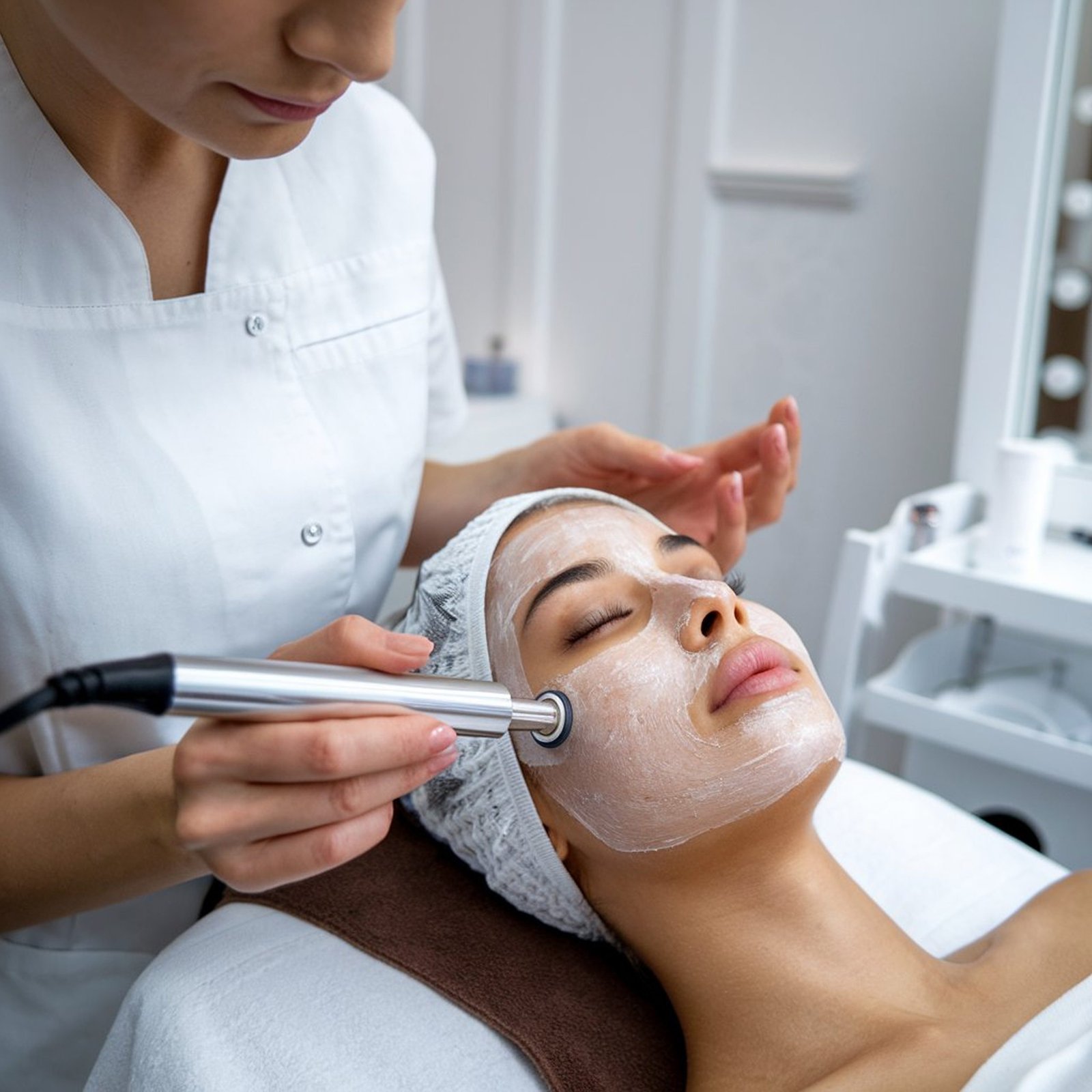
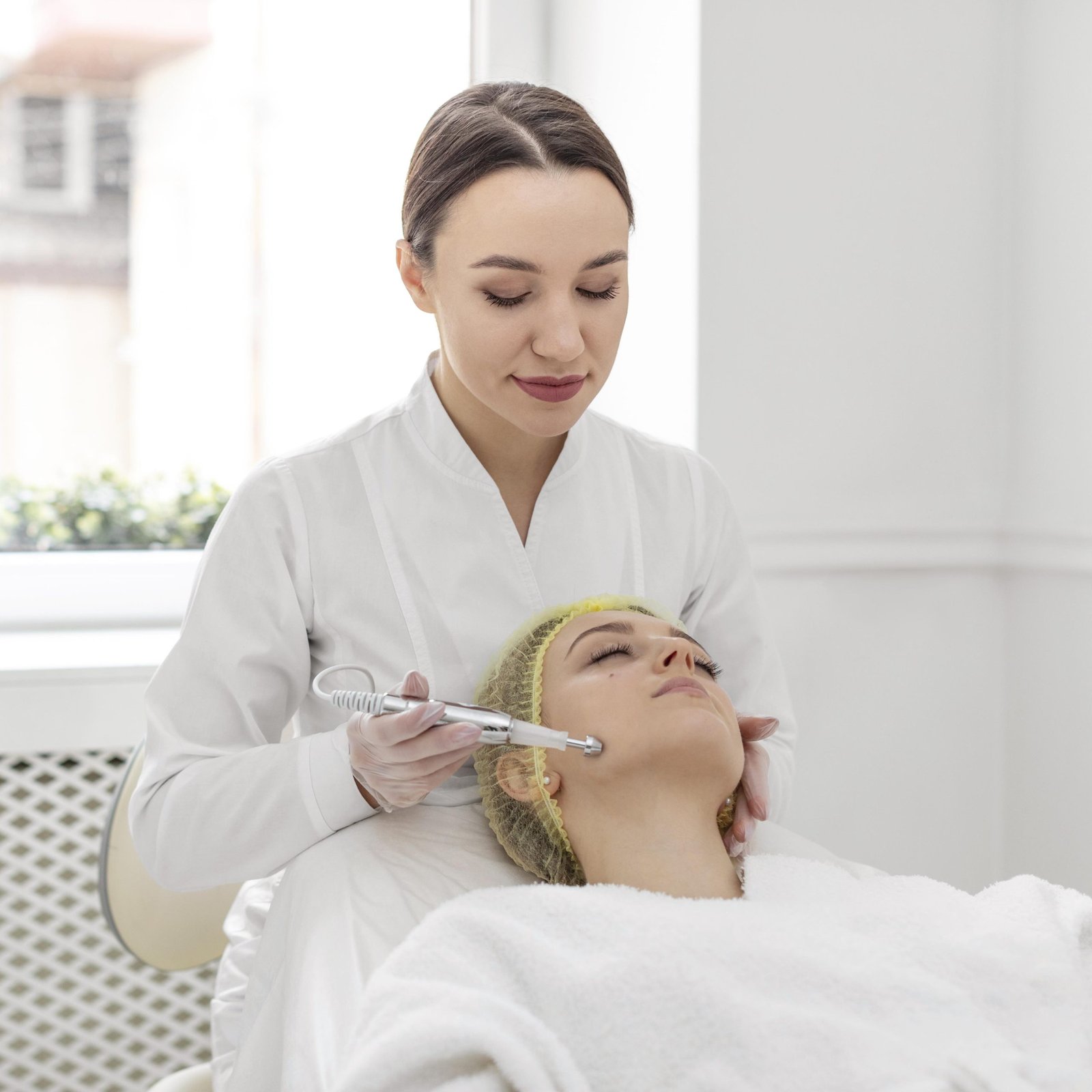
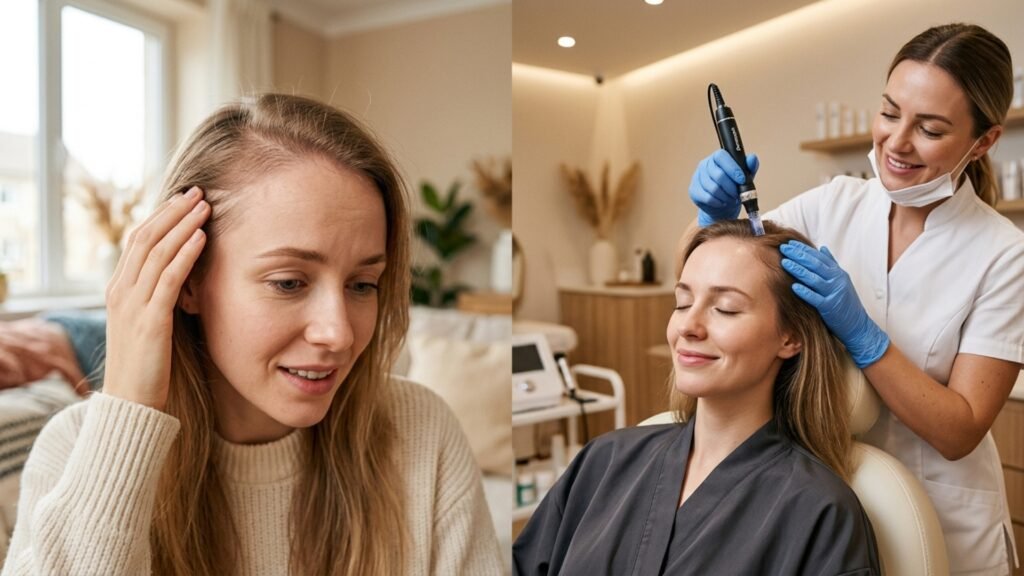
Micro-needling uses a device fitted with ultra-fine sterile needles to create controlled micro-injuries across the scalp surface. These tiny punctures trigger the body’s natural healing response. The scalp immediately begins producing collagen, releasing growth factors, and increasing blood flow to the treated area. One of the most powerful aspects of micro-needling is its ability to boost the absorption of topical treatments.
When growth serums or platelet-rich plasma are applied immediately after needling, they penetrate deeply into the scalp and work directly at the follicle level. This dramatically amplifies the overall treatment outcome. A topical numbing cream is applied to the scalp before each session, making the treatment comfortable and well tolerated. Sessions last between 30 and 45 minutes. Mild redness may appear on the scalp afterward but settles completely within 24 to 48 hours.
Signs We Should Not Ignore When We Notice Hair Loss
Many people dismiss early hair loss as normal shedding, but certain signs clearly indicate that the follicles need professional attention. Catching these warning signals early gives us the best chance to reverse the damage before it becomes permanent.
Excessive Daily Shedding
Losing 50 to 100 strands daily is normal, but finding large clumps on our pillow, in the shower drain, or on our hairbrush consistently points to a deeper problem that needs evaluation.
Visible Scalp Through the Hair
When the scalp becomes clearly visible under normal lighting, especially at the crown or along the part line, it signals that follicle miniaturization has already progressed beyond the early stage.
Rapidly Receding Hairline
A hairline that shifts noticeably within weeks or months, rather than years, indicates an aggressive hair loss pattern that responds better to treatment when caught at this speed.
Patchy Bald Spots
Sudden circular or irregular bald patches appearing on the scalp often signal alopecia areata, an autoimmune condition that requires targeted treatment separate from general thinning.
Scalp Itching or Inflammation
Persistent scalp irritation, redness, or flaking alongside hair loss can indicate an underlying scalp condition that directly affects follicle health and must be addressed before regrowth treatments begin.
Laser Hair Regrowth vs Micro-Needling: Which One Suits Us
Both treatments address hair loss through different biological pathways. The right choice depends on our hair loss pattern, scalp condition, and personal treatment goals.
Laser Hair Regrowth is best suited if we:
- Are experiencing early-stage thinning
- Have a sensitive scalp that reacts easily
- Want a completely painless, zero-downtime treatment
- Prefer a gentle and gradual approach to restoration
Micro-Needling is best suited if we:
- Have moderate to significant hair thinning
- Want faster and more visible density improvement
- Are open to combining treatment with PRP or growth serums
- Need stronger physical stimulation of follicular activity
Combining both treatments in a structured programme delivers the most powerful and comprehensive results. Laser therapy maintains continuous follicular stimulation between micro-needling sessions. Together, they target hair loss from multiple biological angles simultaneously.
The Clinical Evidence Supporting These Treatments
The effectiveness of laser hair regrowth and micro-needling is backed by clinical research, not just client testimonials. Multiple peer-reviewed studies confirm that low-level laser therapy increases hair count and density in both male and female pattern hair loss. The FDA in the United States has cleared LLLT devices for hair loss treatment, which reflects a strong body of evidence supporting both safety and efficacy.
Micro-needling research consistently demonstrates increases in hair count, follicle size, and scalp blood flow following treatment. Studies published in leading dermatology journals show that micro-needling outperforms topical treatments used in isolation. When combined with platelet-rich plasma, results improve even further.
Our Treatment Journey at La Beauté Bradford
Every hair restoration programme at La Beauté begins with a thorough scalp consultation. Our specialists examine our hair loss pattern, scalp condition, and full medical history before recommending any treatment pathway. For laser hair regrowth, sessions run for 20 to 30 minutes and require no preparation or recovery. For micro-needling, a numbing cream is applied beforehand, the session runs for 30 to 45 minutes, and a growth serum is applied immediately after needling.
No two clients at La Beauté receive the same programme. Our treatment plan is built entirely around our scalp, our hair loss type, and our goals. We monitor our progress at every appointment and refine our plan based on how our follicles are responding.
When Will We Start Seeing Results
Results from both laser hair regrowth and micro-needling develop progressively over the course of our programme. Understanding the timeline keeps us consistent and committed throughout the process. Most clients notice a clear reduction in daily shedding within the first four to six weeks. This is the first positive sign that follicles are responding well. Fine new hairs typically become visible between months two and four, gradually thickening and blending with existing strands.
By months five to eight, density improvements are clearly visible and side-by-side photographs show a striking difference. Consistency drives results. Skipping sessions prevents the cumulative benefit from building properly. Our team at La Beauté tracks our progress and ensures our programme stays on course.
Why Acting Early in our 20s and 30s Makes All the Difference
Starting treatment early is the single most impactful decision we can make when we first notice hair loss. Younger patients hold a biological advantage that simply does not exist at later stages. Follicles in their 20s and 30s are weakened, not dead. They are still fully capable of responding to laser stimulation and micro-needling. Treatment at this stage can revive them, strengthen them, and restore their full growth capacity.
Every month of delay allows follicular miniaturisation to advance further. Once follicles reach complete atrophy, restoration becomes impossible. Early treatment also means fewer sessions, lower overall cost, and significantly better long-term results.
Lifestyle Habits That Boost Our Treatment Results
Treatment alone delivers strong results, but supporting it with healthy daily habits accelerates our progress considerably. Nutrition plays a direct role in hair health. A diet rich in protein, iron, omega-3 fatty acids, and vitamins B and D gives follicles the raw materials they need to produce strong, thick hair. Staying well hydrated also supports a healthy scalp environment.
Managing stress through regular exercise, quality sleep, and mindfulness helps keep cortisol levels stable so our hair growth cycle remains undisturbed. Avoid tight hairstyles, excessive heat styling, and harsh chemical treatments throughout our restoration programme. Our team at La Beauté provides full aftercare and lifestyle guidance as part of every treatment plan.
Are These Treatments Safe for Young Adults?
Safety is a top concern for anyone in their 20s and 30s considering aesthetic treatments. The positive reality is that both laser hair regrowth and micro-needling carry excellent safety profiles when performed by trained professionals.
Laser hair regrowth has received clearance from regulatory bodies including the FDA. It produces no radiation, causes no cellular damage, and carries no known long-term side effects. The low-level light used in these devices targets only the follicle without affecting surrounding tissue.
Micro-needling, when performed with sterile equipment in a clinical environment, poses minimal risk. Potential side effects include temporary redness, mild scalp sensitivity, or minor swelling, all of which resolve quickly. The risk of infection remains extremely low when proper hygiene protocols are followed.
Frequently Asked Questions
Is laser hair regrowth safe for people in their 20s?
Yes, laser hair regrowth is completely safe for adults at any age. It uses low-level light energy, carries no risk to surrounding scalp tissue, and has no side effects. It is one of the most widely recommended non-invasive treatments for younger patients experiencing early hair thinning.
How many micro-needling sessions do I need for hair loss?
Most clients need between four and eight sessions, spaced four to six weeks apart. The exact number depends on the severity of our hair loss and how well our scalp responds. Our therapist at La Beauté will confirm a full programme schedule after our initial consultation.
Can laser hair regrowth and micro-needling be combined?
Yes, and it is often the recommended approach. Both treatments work through different biological mechanisms, so combining them produces stronger and faster results than using either treatment on its own.
Will these treatments permanently stop my hair loss?
Both treatments significantly slow hair loss progression and stimulate meaningful regrowth. Maintenance sessions help sustain long-term results. Starting early in our 20s or 30s gives us the strongest possible outcome and the best chance of preserving our hair long term.
Does micro-needling on the scalp hurt?
The scalp is numbed with a topical cream before treatment begins, so discomfort is minimal throughout the session. Most clients feel only mild pressure or a light tingling sensation. Any redness on the scalp clears within 24 to 48 hours, and normal activities resume straight away.
Conclusion
Hair loss in our 20s and 30s is not something we have to accept or simply live with. Modern treatments like laser hair regrowth and micro-needling offer clinically proven, non-surgical solutions that deliver real and visible results when we act early. Our follicles are still active. They are still capable of responding to the right treatment. Every week we wait is a week that follicular miniaturization continues unchecked. The earlier we start, the better our outcome will be.
At La Beauté in Bradford, our specialists are ready to assess our scalp, identify the cause of our hair loss, and build a personalized treatment program that puts us back in control. Visit la-beaute.co.uk today and take the first step toward thicker, healthier, more confident hair.